History of JakToMam
JakToMám did not emerge all at once. Nor did it begin as a startup plan or a quick “product for the market.” It has been evolving for many years — gradually, layer by layer — from psychological practice, from working with maps, from family constellations, from programming, from experiments, and from a long-term search for a form that could capture relationships between concepts, people, and inner experience differently than a typical questionnaire.
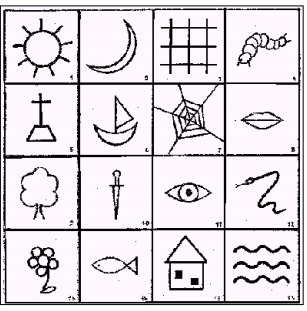
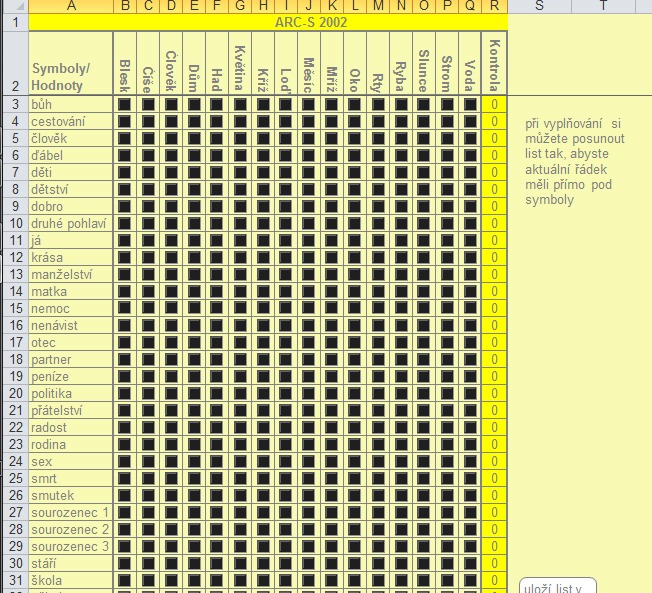
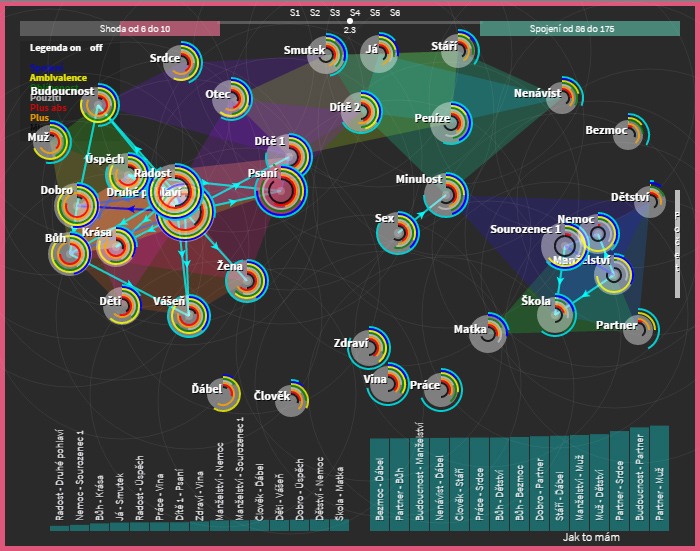
In 2002, I translated the Smékal test into an Excel format that made it possible to evaluate larger matrices of concepts more quickly. It was not yet JakToMám, but even then I was drawn to the idea of transforming complex psychological data into a form that is clear, computationally manageable, and still carries an inner image.
In 2014, I purchased the domain and, within four months of intensive work, programmed the first version of JakToMám. This early version reached its first users and collected approximately 250 tests. Even then, it was clear that this was not a one-time idea, but a direction I would keep returning to.
And in 2026, another major turning point came. With the help of artificial intelligence — especially Claude, but also ChatGPT and Gemini — I launched a new, radically redesigned version of JakToMám. It is not just a facelift of the original prototype, but a much broader system: interactive maps, 2D and 3D views, conscious and implicit layers of the map, AI interpretations, PDF reports, audio outputs, experimental perspectives, and an evolving methodology.
Today, JakToMám is formed at the intersection of several worlds: psychological inspiration, systemic constellations, data analysis, programming, and now also collaboration with AI. AI here is not a replacement for humans nor a “magic button.” It is a tool, a dialogue partner, an accelerator of development, and an expansion of possibilities. The direction, the questions, and the final decisions remain human.
Alongside this development, in 2004 I completed training in family constellations and have been regularly facilitating systemic constellation groups ever since. Since 2019, we have been leading these groups together with my partner Michaela.
Michaela, as a practicing sociologist, also contributes to the development, testing, and operation of JakToMám. What happens in real constellations and what emerges in virtual maps have gradually begun to meet. Two projects close to the heart have become interconnected.
JakToMám is therefore not a project that appeared overnight. It is a long developmental arc — from Excel tables, through the first prototype, to today’s living platform, which continues to evolve, grow, and search for its shape.
JakToMám Development Milestones
The development of JakToMám has several key stages. In 2002, the Excel-based approach to working with larger matrices of concepts was created. In 2004, I completed training in family constellations, which later fundamentally influenced how I think about maps. In 2014, the first web version of JakToMám was launched and gathered initial real user data. And in 2026, the project took a new breath: with the help of AI, it transformed into a significantly broader, more technical, and methodologically bolder platform.
The Role of AI
The new version of JakToMám is being developed in an intensive dialogue with artificial intelligence. Claude, ChatGPT, and Gemini assist with architecture, code, feature design, text formulation, interpretations, and identifying blind spots. However, AI does not determine the direction on its own. It is a collaborative tool, not a replacement for authorship. JakToMám works even without AI; AI adds form, speed, and breadth of possibilities to certain outputs.
Where Constellations and Virtual Maps Meet
Family constellations work with space, relationships, positions, tension, and what is both visible and hidden. JakToMám touches a similar field through a different path: instead of live representatives, it uses concepts, symbols, choices, computations, and visualizations. It is not the same. But both approaches are inspired by the question of how things are arranged in relation to each other — what is close, what is distant, what is pushed aside, what attracts attention, and where tension arises.
Who Is Behind the Project
The project is primarily led by Mgr. Marek Páral, the author of the concept, programmer, and facilitator of family constellations. Michaela also contributes to development, testing, and operations, bringing a sociological perspective, sensitivity to working with people, and valuable practical feedback.