Symbol nemá jeden význam
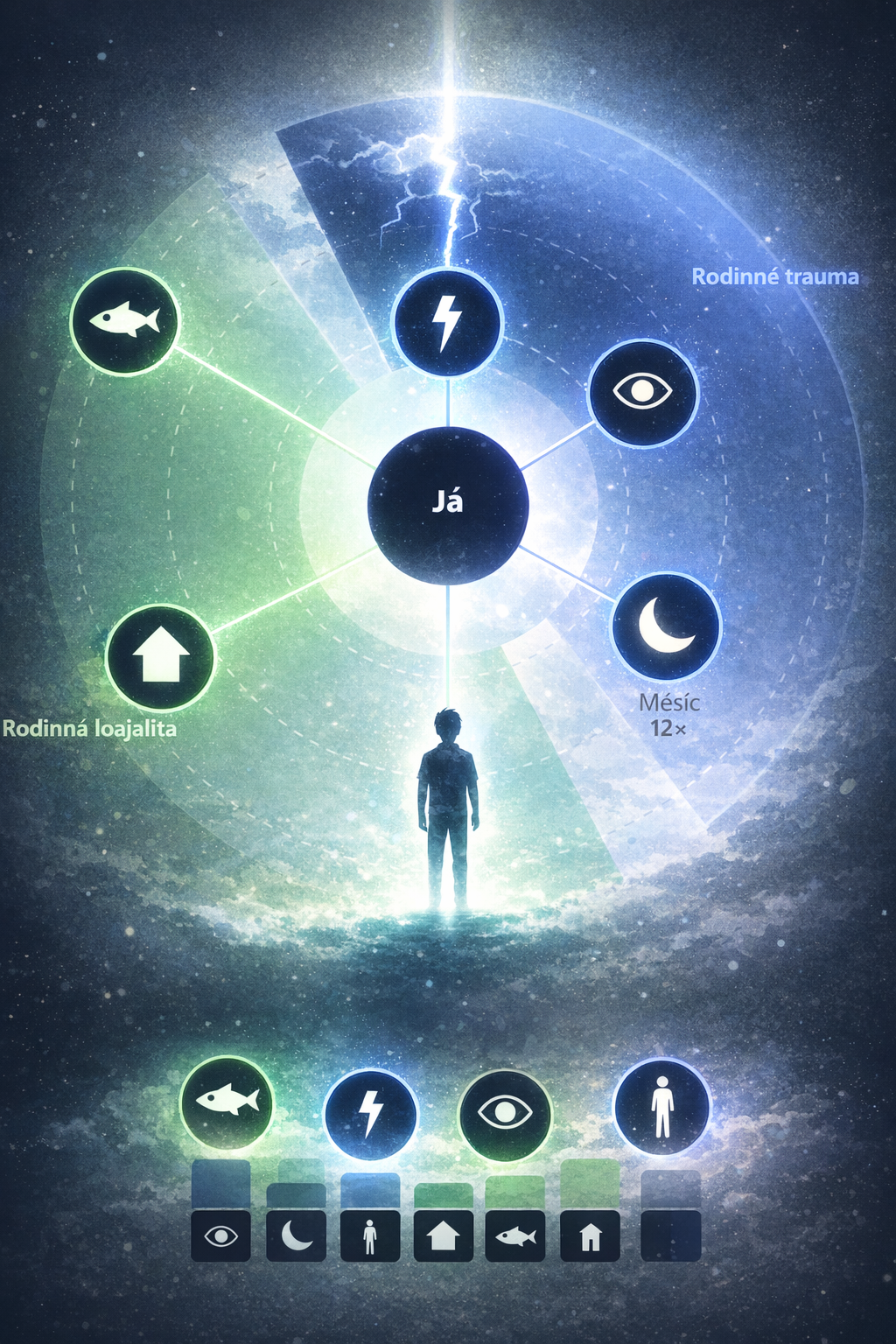
Když jsme začali sbírat data z prvních map, byla v tom trochu skrytá představa:
že každý symbol má „nějaký“ význam.
Že had znamená hrozbu.
Že dům znamená bezpečí.
Že slunce znamená radost.
Tak nějak to máme naučené. Kulturně. Intuitivně.
Jenže data začala ukazovat něco jiného.
Ne drobnou odchylku.
Ale strukturální změnu pohledu.
Jeden symbol, mnoho světů
Vezměme si třeba blesk.
V jedné mapě se objevuje jako:
- intenzivní emoce
- krize
- náhlý zlom
V jiné:
- tělesný neklid
- napětí v organismu
Jinde:
- rodinné konflikty
- narušení vztahů
A jinde ještě:
- změna
- motivace
- impuls k pohybu
To není šum.
To není chyba měření.
To je vlastnost.
Symbol není definice
Z těchto dat se postupně začíná rýsovat jednoduché, ale zásadní zjištění:
Symbol nemá jeden význam.
Má pole významů.
Něco jako rozsah, ve kterém se může pohybovat.
A to, co vidíme v konkrétní mapě, není „pravý význam“,
ale význam, který vznikl v kontextu.
Mapa jako kontext
Každá mapa je trochu jiný svět.
- jiná otázka
- jiné pojmy
- jiné napětí mezi nimi
A právě tohle prostředí „rozhodne“, kam se symbol přikloní.
Například:
-
Had se může stát:
- hrozbou
- nervovou reakcí
- rodinným napětím
- nebo dokonce energií
-
Dům může být:
- bezpečí
- tělo
- struktura
- nebo systém vztahů
Symbol se nepřenáší hotový.
Rodí se až v síti vztahů.
Role je stabilnější než význam
Zajímavé je, že zatímco konkrétní významy kolísají, něco zůstává překvapivě stabilní:
role symbolu v mapě
Například:
- Dům → často globální integrátor (drží celek pohromadě)
- Strom → ukotvuje, stabilizuje
- Slunce → propojuje, funguje jako most energie
- Had → často lokální napětí nebo spoj mezi konfliktními místy
Jako by symboly neměly pevný obsah,
ale měly typ chování v systému.
Opakující se osy
Napříč různými mapami se začínají objevovat hlubší struktury.
Ne konkrétní významy, ale napětí mezi nimi:
- stabilita × změna
- bezpečí × hrozba
- smysl × chaos
- růst × tíha
Symboly se po těchto osách pohybují.
A konkrétní mapa ukáže, kde právě leží.
Co z toho plyne
Tohle všechno má jeden důležitý důsledek:
JakToMám není slovník symbolů.
Není to systém, který říká:
„toto znamená toto“
Je to systém, který ukazuje:
jak význam vzniká
A co dál
Tohle je zatím začátek.
S přibývajícími daty začíná vznikat něco nového:
živá knihovna symbolů
Ne jako pevný seznam definic,
ale jako mapa jejich chování napříč kontexty.
Možná v ní půjde vidět:
- v jakých situacích se symbol posouvá
- jaké významy jsou pro něj typické
- jaké role nejčastěji zaujímá
- s čím se spojuje
- čemu se vyhýbá
A možná jednou:
- porovnat vlastní mapu s tímto „kolektivním polem“
- uvidět, kde se shodujeme
- a kde se náš význam odchyluje
Neuzavřený závěr
Možná jsme si dlouho mysleli,
že význam je něco pevného, co stačí správně pojmenovat.
Ale možná je to jinak.
Možná význam není věc.
Možná je to vztah.
A symbol není odpověď.
Je to místo, kde se ten vztah na chvíli ukáže.
Vyzkoušej svůj mentální prostor
Projekce symbolů odhalí, jak vidíš svůj svět – bez správných a špatných odpovědí.
Spustit test