Kolik různých světů může skrývat jedna mapa?
Když člověk dokončí test v JakToMám, co vlastně dostane?
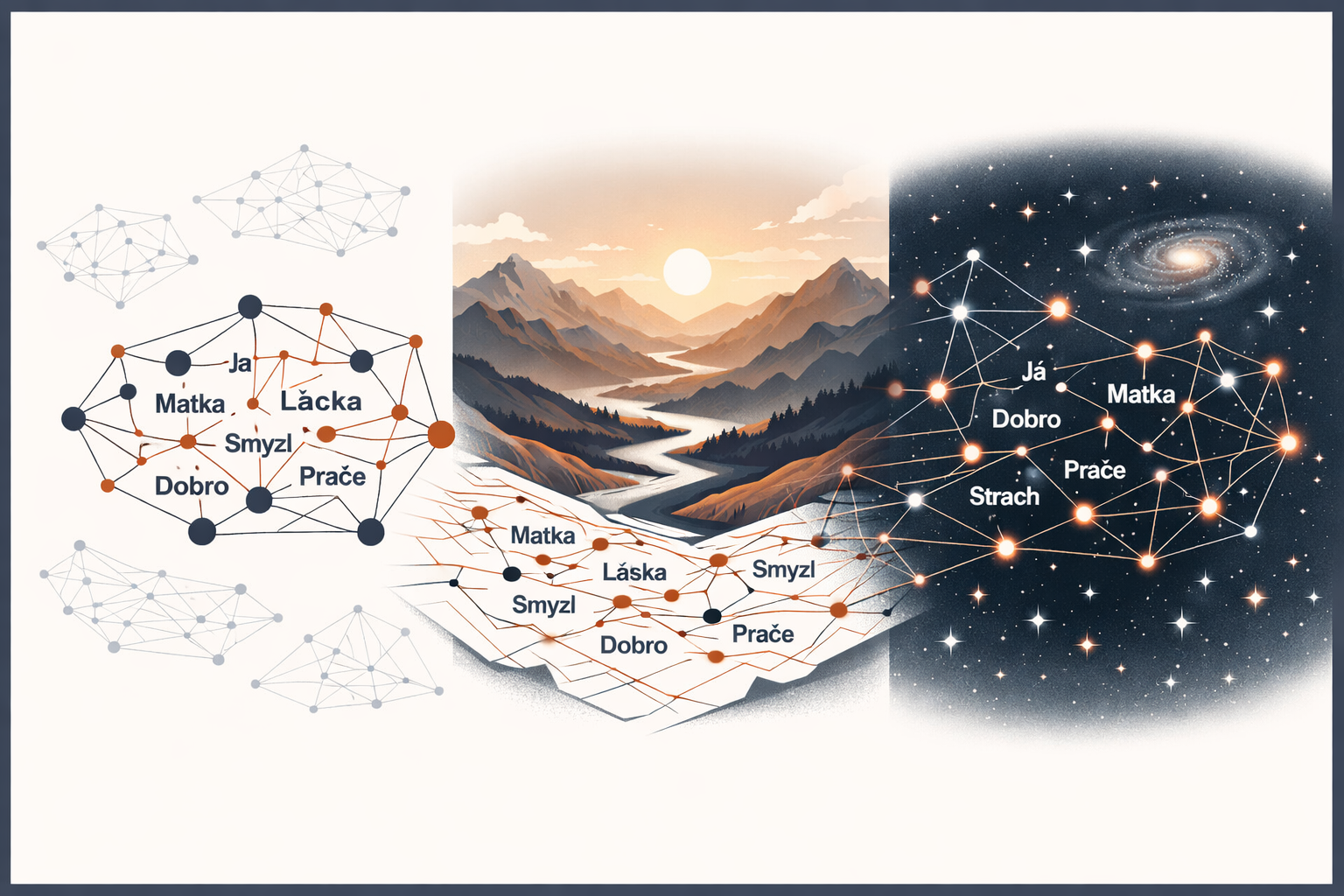
Když člověk dokončí test v JakToMám, dostane výsledek: osobní mapu pojmů.
Některé pojmy jsou si blízko, jiné daleko.
Vznikne obraz vztahů v jeho vnitřním světě.
Na první pohled to může působit, jako by tato mapa byla přímým otiskem jediné konkrétní odpovědi — jedné jediné matice přiřazení symbolů.
Jenže matematika říká něco mnohem zajímavějšího.
Jedna mapa může odpovídat nepředstavitelnému množství různých možných matic odpovědí.
A právě to je jeden z důvodů, proč je mapa tak silný nástroj.
Jak test vlastně vzniká
V testu máte například:
- 20 pojmů (např. Já, Matka, Láska, Dobro…)
- 16 symbolů
- ke každému pojmu vybíráte 8 symbolů
Každá odpověď tedy vytvoří tabulku (matici):
- řádky = pojmy
- sloupce = symboly
- v políčku je 1, pokud je symbol přiřazen
- 0, pokud ne
Matematicky to vypadá jednoduše.
Ale počet všech možných vyplnění této tabulky je obrovský.
Počet kombinací, jak vybrat 8 symbolů z 16, je:
12 870
A protože to děláme pro 20 pojmů, dostaneme:
12 870²⁰ ≈ 1,5 × 10⁸²
To znamená číslo s 82 nulami.
Pro představu:
- počet atomů v pozorovatelném vesmíru se odhaduje asi na 10⁸⁰
- prostor všech možných odpovědí testu je tedy větší než počet atomů ve vesmíru
Samozřejmě většina těchto matic by vypadala naprosto chaoticky.
Lidské odpovědi tvoří jen malý, strukturovaný zlomek tohoto prostoru.
Ale i tak je ten prostor obrovský.
Z matice vzniká mapa
Z této tabulky se potom spočítají vzdálenosti mezi pojmy.
- pokud mají dva pojmy mnoho společných symbolů → jsou si blízko
- pokud jich mají málo → jsou dál od sebe
Z těchto vzdáleností se pomocí matematické metody (MDS – multidimensional scaling) vytvoří mapa v rovině.
Mapa tedy není přímý obrázek odpovědí.
Je to geometrický obraz vztahů mezi pojmy.
Překvapivá věc: jedna mapa ≠ jedna matice
A tady přichází zajímavý moment.
Mnoho různých matic může mít stejné vztahy mezi pojmy.
Například:
- nezáleží na tom, jestli dva pojmy sdílejí symbol „kruh“ nebo „hvězdu“
- důležité je hlavně kolik symbolů sdílejí
Proto mohou různé konkrétní tabulky vést ke stejným vzdálenostem mezi pojmy.
A tedy i ke stejné mapě.
Jen přeházení symbolů
Už jen jednoduchý trik ukazuje, jak rychle počet roste.
Kdybychom pouze přeházeli symboly mezi sloupci, vztahy mezi pojmy by zůstaly stejné.
Počet způsobů, jak přeházet 16 symbolů, je:
16! (faktoriál) = 20 922 789 888 000
tedy asi 21 bilionů.
A to je jen velmi malý zlomek všech matic, které mohou vytvořit stejnou mapu.
Ve skutečnosti jich může být mnohem víc.
Co z toho plyne
Mapa, kterou vidíte ve výsledku testu, není jeden konkrétní „otisk odpovědí“.
Je to spíš stabilní obraz vztahů.
Matematicky řečeno:
Mapa reprezentuje celou rodinu různých možných matic,
které mají podobnou strukturu vztahů mezi pojmy.
To je vlastně dobrá zpráva.
Protože to znamená, že mapa není citlivá na drobné náhody nebo malé změny odpovědí.
Zachycuje hlubší strukturu, ne jednotlivé detaily.
Podobné jako mapa krajiny
Je to trochu jako s mapou krajiny.
Různé cesty, pěšiny nebo detaily se mohou měnit.
Ale tvar hor, údolí a řek zůstává.
Mapa v JakToMám se snaží zachytit právě tento tvar krajiny vztahů ve vašem vnitřním světě.
A právě proto může být tak překvapivě výstižná.
Vyzkoušej svůj mentální prostor
Projekce symbolů odhalí, jak vidíš svůj svět – bez správných a špatných odpovědí.
Spustit test